
Sawn Oak Lamella vs Rotary Veneer: Where the Price Difference Comes From
Published:08/30/2026
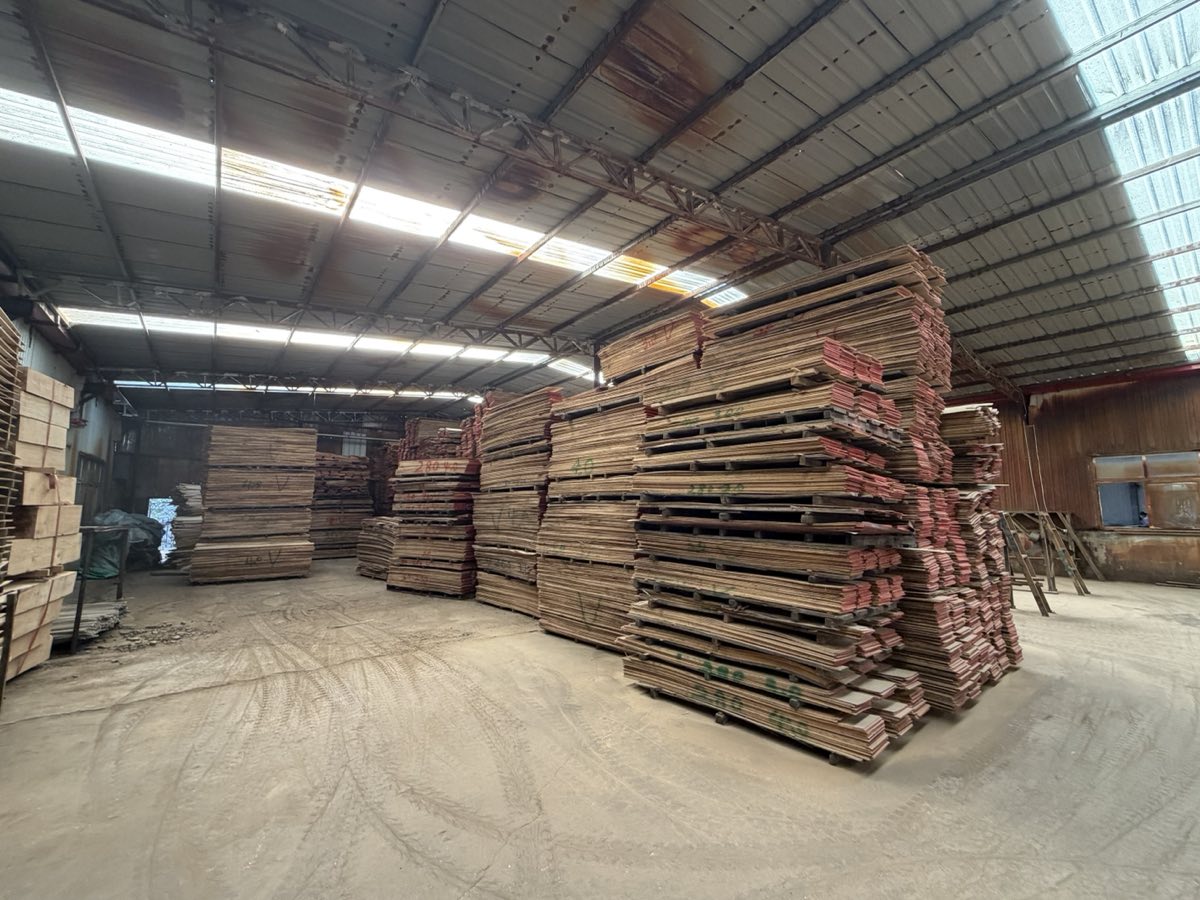
"Oak top layer" on a purchase order can mean two completely different products, several times apart in price and suited to different uses.
Three processes
- Rotary cut: the log turns on a lathe and the knife peels a continuous sheet. Highest yield, usually 0.3–0.6 mm, with a wild looping figure that reads visibly unlike solid wood;
- Sliced: a flitch moves against a knife, taking one leaf at a time. Figure close to solid wood, typically 0.5–0.6 mm, used for premium faces;
- Sawn: cut with a saw blade, 2–6 mm thick. The figure is solid-wood figure — because it is a thin solid board.
The comparison
| Rotary / sliced veneer | Sawn lamella | |
|---|---|---|
| Thickness | 0.3–0.6 mm | 2–6 mm |
| Yield | High, no kerf loss | Lower, kerf takes a share |
| Refinishable | Essentially no | Several sanding cycles |
| Figure | Rotary figure is visibly distorted | True solid-wood figure |
| Price | Lower | Higher |
| Typical use | Faced panels, furniture | Engineered flooring top layer |
Why sawn costs more
The blade has thickness, so every cut loses a kerf. On a 3 mm lamella that loss is a meaningful share of the log. Sawing is also only the start — drying, calibrating, sanding and piece-by-piece grading all follow. The cost sits in the process, not in the pricing.
Which to specify
For engineered flooring, particularly a range sold on refinishability and service life, sawn lamella is the only real option. For faced panels and cabinet fronts that will never be sanded, veneer is the economical choice.
We produce sawn European oak lamella, 3.0 and 4.0 mm from stock. For samples, call +86 159 4630 8288.