
Oak Lamella Grades: What AB / C / ABCD / DE / EF / F Actually Mean
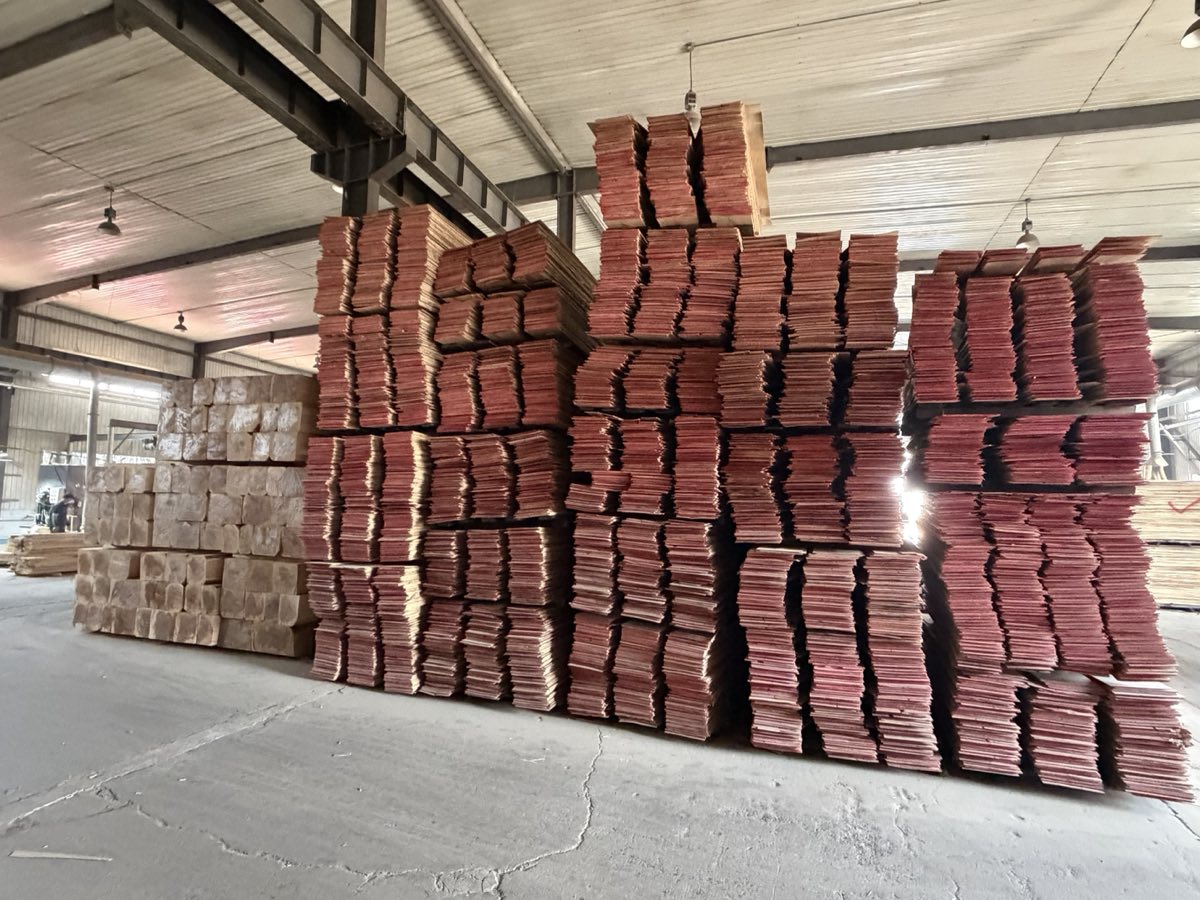
Grading is where most lamella disputes start. Two mills can both call a pack "AB" and ship visibly different material. The standard is not missing — the criteria were never aligned. Here is how we grade.
What gets assessed
- Colour: heartwood/sapwood proportion and the light-to-dark spread within a pack;
- Knots: live or dead, diameter, count per piece;
- Worm holes: presence and density;
- Surface and end checks: length, and whether they run through;
- Figure: proportion of quartered to flat-sawn, which premium ranges often specify separately.
Roughly what each grade holds
- AB — the cleanest: tight colour, mostly small live knots; for natural and light-finish premium ranges;
- C — visibly more knots and colour movement; the value grade;
- ABCD — mixed: clean through knotty in one pack, good for natural-look ranges over large areas at controlled cost;
- DE — stronger knots and colour; works well under brushed, aged and dark finishes;
- EF — rustic positioning: large knots, strong character;
- F — the most defect-bearing grade, for specific styles or where surface demands are low.
Why samples settle it
However carefully written, the descriptions above are still words. Only a physical sample pins the criteria down. Our practice: the customer sends or selects a sample, both sides keep one, and we self-check against it before shipping. If you want your own company standard or an international standard applied, write it into the contract and we will sort to it.
Higher is not always better
For brushed, aged or dark-oiled ranges, AB simply will not produce the look — and you pay more for the privilege. Decide the style and retail position first, then work back to the grade.
For samples or our grading notes, contact Mr. Geng at +86 159 4630 8288.